
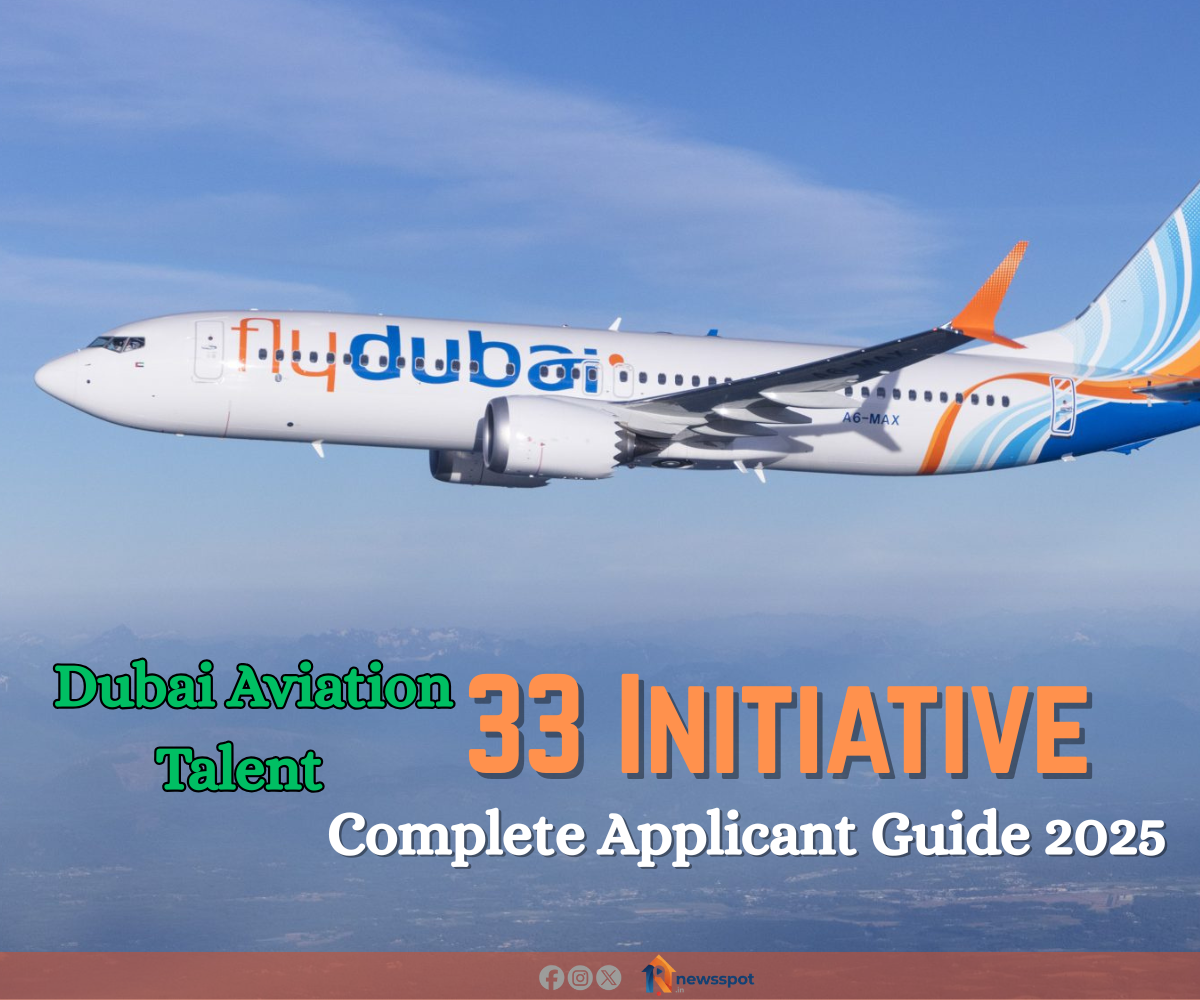
The Aviation Talent 33 Initiative is a flagship program launched by the Dubai government to solidify the emirate’s position as a premier global aviation hub. Aligned with Dubai’s broader 2033 strategies for liveability, sustainability, and economic growth, it targets the creation of 15,000 new jobs in the aviation sector by 2033. The initiative emphasizes skill development, technological innovation, and workforce diversification, with an immediate rollout of 4,000 training and upskilling slots over the next 1–2 years. Backed by over 30 strategic partnerships with airlines, airports, maintenance organizations (MROs), and training academies, it focuses on future-ready competencies like AI integration, sustainable aviation, and advanced air mobility. This comprehensive effort not only addresses global talent shortages but also supports mega-projects like the expansion of Al Maktoum International Airport into one of the world’s largest facilities.
The initiative was approved as part of a multi-sector AED 18.3 billion investment plan, announced during the UAE Annual Government Meetings 2025, underscoring Dubai’s commitment to human capital in high-growth industries.
Launch and Background
- Launch Date: Approved on November 4, 2025, and publicly announced on November 5, 2025, during the UAE Annual Government Meetings 2025 in Abu Dhabi.
- Approval Authority: Chaired by H.H. Sheikh Hamdan bin Mohammed bin Rashid Al Maktoum, Crown Prince of Dubai and Chairman of the Executive Council.
- Context: Forms part of Dubai’s holistic 2033 agenda to become the world’s most liveable and healthiest city. It integrates with related strategies like the Public Parks and Greenery Strategy (800+ projects), Education 33 (120,000 new school seats), Sports Sector Plan 2033 (19 programs across 17 sports), and healthcare expansions for early disease detection.
- Strategic Rationale: Dubai’s aviation sector is booming, driven by Dubai International Airport (DXB) handling over 90 million passengers annually and Al Maktoum International (DWC) poised for exponential growth. The initiative counters global pilot shortages (projected 633,000 new pilots needed worldwide by 2043) and aligns with UAE’s Emiratization goals while attracting international talent.
Objectives and Scope
The core aim is to reinforce Dubai’s aviation leadership through talent pipelines that blend technical expertise, innovation, and sustainability. Key objectives include:
- Job Creation: 15,000+ roles across aviation value chains, from entry-level to executive positions.
- Skill Development: Build “future-ready” competencies in emerging tech (e.g., AI, drones, eVTOLs) and green practices (e.g., sustainable fuels, emissions reduction).
- Infrastructure Support: Directly tied to Al Maktoum Airport’s expansion, which will require specialized workforce for cargo, passenger ops, and MRO.
- Inclusivity: Prioritize UAE nationals (Emiratization) but open to expatriates, fresh graduates, and career switchers to foster diversity.
- Long-Term Impact: Contribute to Dubai’s goal of top-10 global ranking in education and human capital by 2033, while boosting GDP through aviation’s 20%+ sector contribution.
Key Components
1. Job Opportunities
- Target Roles: Spanning pilots, cabin crew, ground operations, aircraft engineers, air traffic controllers (ATC), cargo specialists, digital aviation experts (e.g., AI/data analysts), and support functions like finance, HR, and sustainability officers.
- Scale: Phased rollout—first 2,000–3,000 jobs in 2026–2027, scaling to full 15,000 by 2033.
- Salary Expectations: Entry-level (AED 8,000–15,000/month tax-free); mid-level (AED 20,000–35,000); senior (AED 40,000+), plus benefits like housing, flights, and health insurance.
- Employers: Primarily Dubai Airports, Emirates Group, flydubai, dnata, and partners like Etihad (expanding Emirati hiring by 50%).
2. Training and Upskilling Slots
- Immediate Allocation: 4,000 slots for 2025–2026, including ab initio (zero-experience) programs for pilots and advanced certifications.
- Program Types:
- Cadet Pilot Training: 12–24 months, covering flight hours, simulators, and type ratings (e.g., Boeing 737/Airbus A350).
- Technical Upskilling: Courses in MRO, avionics, AI for predictive maintenance, and sustainable aviation fuel (SAF).
- Soft Skills/Leadership: Workshops on customer service, crisis management, and digital transformation.
- Delivery: Hybrid model—classroom at Dubai Aviation Academy, online modules, and on-the-job training at DWC/DXB.
- Cost Support: Subsidized or fully funded for eligible candidates; partnerships cover 70–100% for UAE nationals.
3. Partnerships
- Number: 30+ collaborators, including:
- Airlines: Emirates, flydubai, Etihad Airways.
- Airports/Authorities: Dubai Airports, Dubai Civil Aviation Authority (DCAA), UAE Ministry of Defence.
- Training Providers: Airbus Flight Academy, Sevenair Academy, flydubai Flight Training Centre.
- Global Partners: Boeing, International Air Transport Association (IATA), and MRO firms like ST Engineering.
- Focus: Joint ventures for curriculum design, internships, and recruitment pipelines. Examples include Etihad’s 50% Emirati growth strategy and flydubai’s Ab Initio program for 17+ high school grads.
| Partnership Type | Examples | Contributions |
|---|---|---|
| Training Alliances | Airbus, Sevenair | Ab initio pilot programs; 633,000 global pilot gap address. |
| Airline Employers | Emirates, dnata | 3,700+ hires in H1 2025–26; structured career paths. |
| Government/Infra | DCAA, Dubai Airports | Access to DWC expansion; Emiratization quotas. |
| Innovation Hubs | Dubai Airshow, VISTA | Startup integrations for AI/eVTOL talent. |
Eligibility and Target Audience
- Age: 18+ (17+ for cadet programs).
- Nationality: Open to UAE nationals (priority via Nafis program), residents, and expatriates.
- Qualifications:
- Entry-level: High school diploma; English proficiency (IELTS 5.5+).
- Mid-career: Relevant experience (e.g., 1–5 years in logistics/tech); aviation certs (e.g., ATPL for pilots).
- No prior experience needed for many slots—focus on aptitude tests.
- Diversity Goals: 40%+ women; underrepresented groups via DEI initiatives.
Application Process
Applications are centralized through official UAE government portals to ensure transparency and efficiency. Deadline for first batch: November 30, 2025.
Step-by-Step Guide
- Register Online: Visit the dedicated portal at dcaa.gov.ae/talent33 or talent.gov.ae/aviation33 (DCAA/UAE Government portal).
- Create Profile: Submit personal details, nationality, education history, and work experience via secure form.
- Select Track: Choose from categories like “Pilot Cadet,” “Engineering Upskill,” or “Operations Roles.”
- Upload Documents: CV (PDF, max 2MB), certificates, passport/ID, and English test scores if applicable.
- Assessment Phase: Online aptitude tests (e.g., psychometric, technical quizzes) within 2 weeks.
- Interviews & Selection: Virtual/in-person interviews; shortlisted candidates notified via email/SMS.
- Onboarding: Accepted applicants receive training schedules and visa support (if needed).
- Tips: Tailor applications with keywords like “AI aviation” or “sustainable ops.” UAE nationals apply via Nafis for priority. Track status on the portal; expect 4–6 week turnaround.
Timeline and Milestones
| Phase | Timeline | Key Deliverables |
|---|---|---|
| Launch & Planning | Nov 2025 | Portal live; first partnerships signed. |
| Batch 1 Recruitment | Dec 2025–Mar 2026 | 1,000 training slots filled; 500 jobs posted. |
| Initial Training Rollout | Apr–Dec 2026 | 4,000 slots activated; pilot cohorts graduate. |
| Scale-Up | 2027–2030 | 8,000+ jobs created; AI/digital focus intensifies. |
| Full Achievement | 2031–2033 | 15,000 jobs; evaluation against KPIs (e.g., 90% placement rate). |
- Monitoring: Annual reports by DCAA; integration with Dubai Airshow 2025 (Nov 17–21) for recruitment events.
Benefits and Incentives
- For Participants: Tax-free salaries, relocation aid, family visas, and career progression (e.g., fast-track to management).
- For Employers: Access to pre-vetted talent; subsidies for training (up to AED 50,000 per hire).
- Broader Impact: Projected AED 5–10 billion economic boost; enhanced Dubai brand as talent magnet.
Challenges and Opportunities
- Challenges: High competition (thousands of applicants expected); need for rapid upskilling amid tech shifts.
- Opportunities: Ties into Dubai Airshow 2025’s NextGen Leaders and Academy programs for mentorship. Global pilot shortage creates leverage for Dubai hires.