
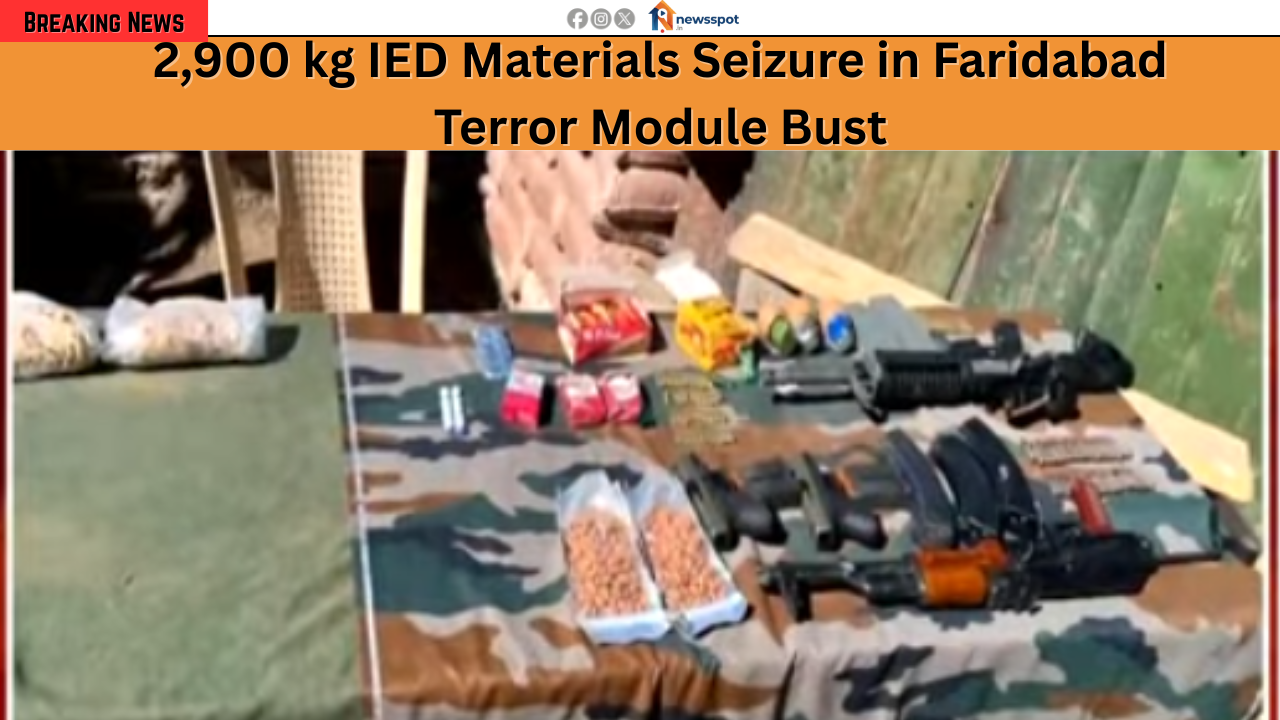
In a major counter-terrorism success today, the Jammu & Kashmir (J&K) Police, in coordination with Haryana Police and the Intelligence Bureau (IB), have fully dismantled an interstate and transnational terror module linked to the Pakistan-based Jaish-e-Mohammed (JeM) and al-Qaeda-affiliated Ansar Ghazwat-ul-Hind (AGuH). This operation, stemming from intelligence gathered after the arrest of a Kashmiri doctor in late October, has led to seven arrests, including two key medical professionals radicalized for terror activities. The network was planning large-scale attacks in the Delhi-NCR region, and the bust has been hailed as one of the largest explosives seizures in recent years.
Key Developments and Seizures:
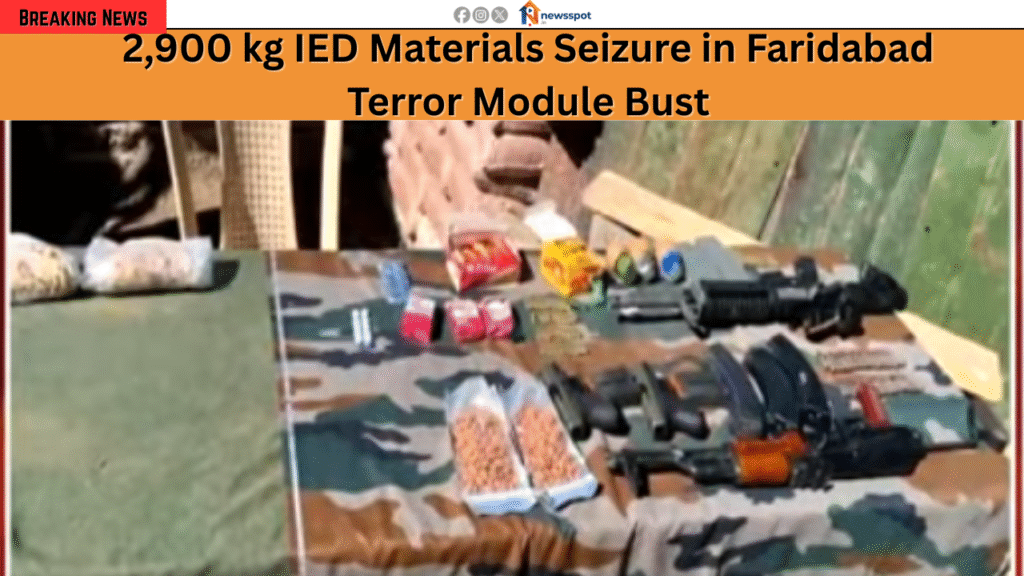
- Explosives Haul: Approximately 350 kg of high-grade explosives (initially suspected as RDX but confirmed as ammonium nitrate via preliminary tests) were recovered from a rented house in Dhauj village, Faridabad (about 45 km from Delhi). This forms part of a broader 2,900 kg of IED-making materials, including chemicals, inflammable substances, electronic circuits, batteries, wires, remote controls, and 20 timers for assembling improvised explosive devices (IEDs).
- Arms Recovery: Two AK-47 assault rifles (one described as a Krinkov variant), one pistol, three magazines, and over 83 live rounds of ammunition were seized. Additional handguns and stockpiles were found across raid sites in J&K and Haryana.
- Arrests and Network:
- Dr. Muzammil Shakeel (also spelled Mujammil Shakil), an MBBS doctor and teacher at Al-Falah Medical College in Faridabad (originally from Pulwama, J&K), was arrested on October 30. He had rented the Dhauj house three months ago to store the contraband. Shakeel was previously wanted for pasting JeM propaganda posters in Srinagar.
- Dr. Adil Ahmad Rather, a senior resident at Government Medical College (GMC) Anantnag (from Saharanpur, UP), was the initial arrest that cracked the case. His interrogation led to Shakeel and further leads.
- Five other operatives, including a woman doctor emerging as a key suspect in the radicalization chain, have been detained. All are being interrogated to map cross-border handlers and supply chains (suspected from J&K and Punjab).
- Operation Timeline: Raids intensified over the weekend, with the Faridabad recovery on November 9-10. The module involved “white-collar terrorism,” where professionals like doctors were radicalized to procure and hide materials locally for urban attacks.
Ongoing Investigation:
- Faridabad Police Commissioner Satender Kumar Gupta confirmed the joint operation is still active, with forensic analysis underway to trace explosive origins. No immediate threats remain, but probes focus on sleeper cells and potential targets in NCR.
- Officials emphasize this as a “major foiled plot” near the national capital, highlighting the role of intelligence from J&K’s ongoing anti-terror drives.