
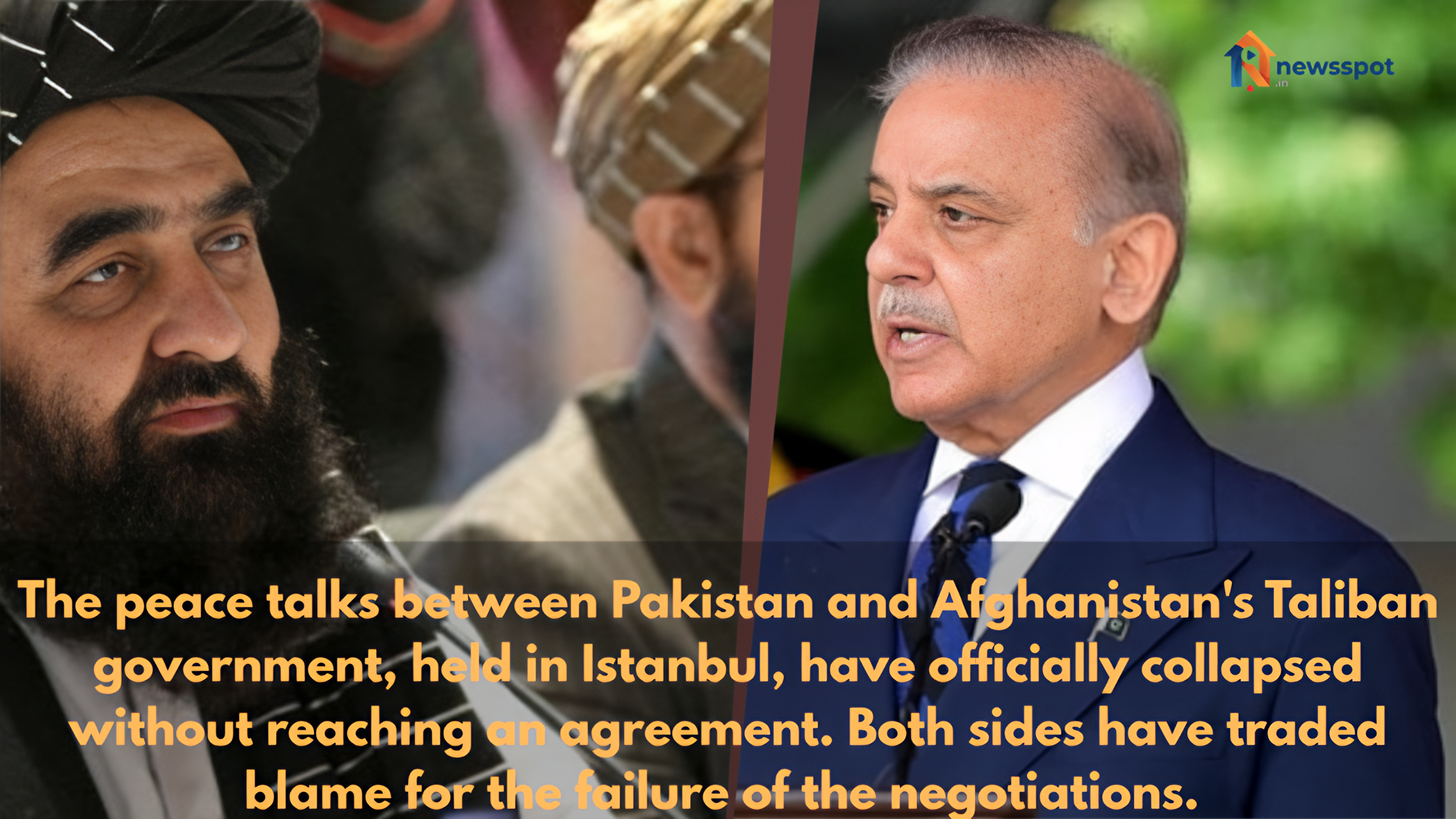
The peace talks between Pakistan and Afghanistan’s Taliban government, held in Istanbul, have officially collapsed without reaching an agreement. Both sides have traded blame for the failure of the negotiations.
Blame and Reasons for Collapse
Taliban’s Stance (Afghanistan):
Taliban spokesman Zabihullah Mujahid stated the talks broke down because Pakistan’s demands were “unreasonable” and beyond Afghanistan’s “capacity.” The Taliban accused Pakistan of trying to shift all responsibility for its internal security onto the Afghan government.
They also alleged that “certain elements” within Pakistan’s military and intelligence services are deliberately sabotaging the dialogue process.
Pakistan’s Stance:
Pakistani officials, including the Defence Minister, confirmed the failure, stating the talks are in an “indefinite pause” with no plan for a fourth round. Pakistan accused the Afghan delegation of coming “without any program” and refusing to sign a written agreement on Pakistan’s demand to control cross-border terrorism, insisting only on verbal assurances.
Pakistan has repeatedly accused the Taliban government of harboring the Tehreek-e-Taliban Pakistan (TTP), a militant group responsible for a surge in attacks inside Pakistan.
Taliban’s Warning:
Taliban spokesman Zabihullah Mujahid warned that while war is “not our first choice,” if war breaks out, they “have the right to defend ourselves.”
He also reiterated the official position that Afghanistan “will not allow anyone to use its territory against another country, nor permit actions that undermine its sovereignty or security.”
Current Status of Ceasefire
Despite the collapse of the peace talks, both sides have indicated that the ceasefire that was previously established remains in place for now.
However, Pakistan’s Defence Minister warned that the ceasefire would only hold as long as there are no attacks originating from Afghan territory.