
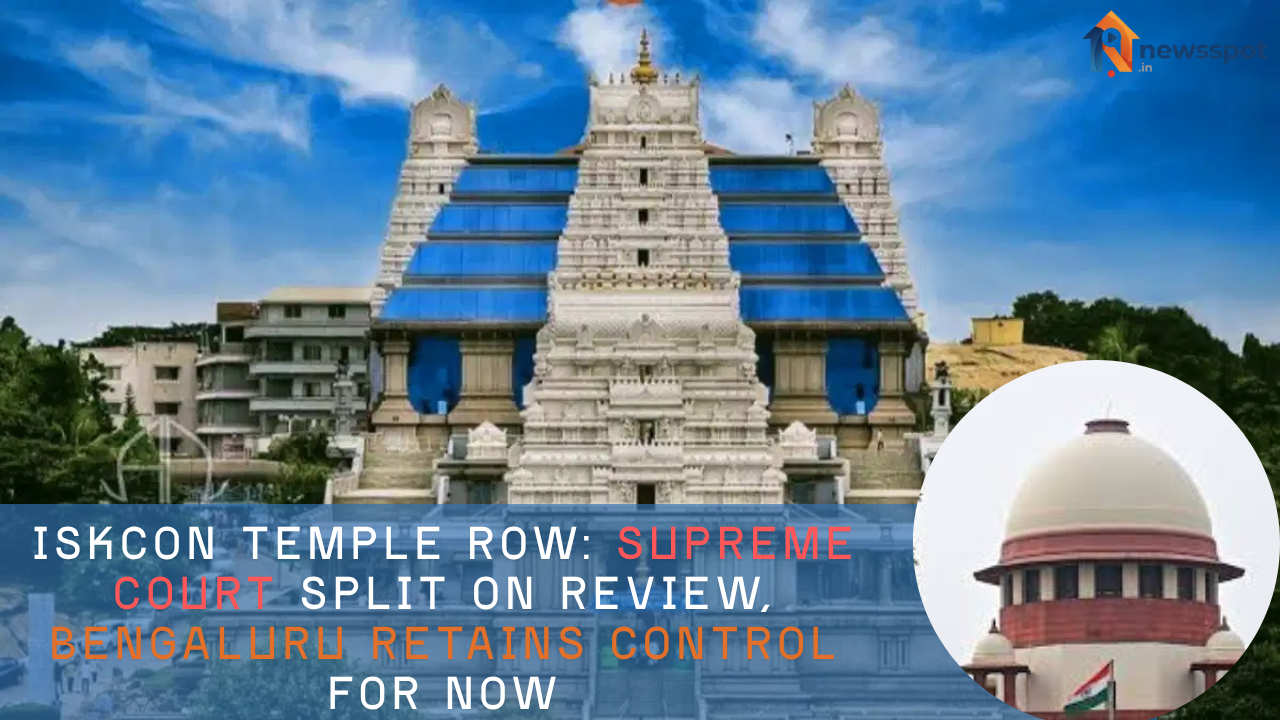
The International Society for Krishna Consciousness (ISKCON) is a global Hindu religious organization founded in 1966 by A.C. Bhaktivedanta Swami Prabhupada. After his death in 1977, internal disagreements over spiritual succession led to splits, including a major rift in India between the Mumbai-based ISKCON (aligned with the Governing Body Commission) and the Bengaluru-based ISKCON Society (which upholds Prabhupada as the sole initiating guru).
The core issue revolves around ownership and control of the Hare Krishna Hill temple (Rajajinagar, Bengaluru), an iconic site built on land allotted by the Bangalore Development Authority (BDA) in 1988 to the locally registered ISKCON Bengaluru Society. ISKCON Bengaluru, registered independently in 1978 under the Karnataka Societies Registration Act, claims full autonomy, while ISKCON Mumbai asserts overarching authority as the “parent” body.
This led to a 25-year legal battle:
- 2001: ISKCON Bengaluru files a suit in Bengaluru City Civil Court, seeking declaration of ownership, independence from Mumbai’s control, and an injunction against interference.
- 2009: Trial court rules in favor of Bengaluru, affirming its ownership and restraining Mumbai.
- 2011: Karnataka High Court reverses this, siding with Mumbai and granting it control.
- May 16, 2025: Supreme Court (Justices Abhay S. Oka and Augustine George Masih) overturns the High Court, restoring the trial court’s decree. It holds that the Bengaluru temple belongs to the locally registered ISKCON Society Bengaluru, not Mumbai.
Review Petition and Today’s Split Verdict (November 8, 2025)
Following the May 2025 Supreme Court judgment favoring Bengaluru, ISKCON Mumbai filed a review petition, arguing errors in the ruling (e.g., misinterpretation of society registrations and authority).
Today, a two-judge bench (Justices CT Ravikumar and Sanjay Karol) delivered a split verdict on the review:
- Justice CT Ravikumar: Allowed the review petitions to be listed for open-court hearing and issued notices to respondents (ISKCON Bengaluru). He found potential grounds for re-examination.
- Justice Augustine George Masih: Dismissed the reviews outright, holding no “error apparent on the record” that warrants review.
In such splits, the petitions typically return to the Chief Justice of India (CJI) for reconstitution before a larger bench (likely three judges) to resolve the matter. This prolongs the uncertainty over the temple’s control, though the May 2025 order remains operative until further decision.
Implications
- For ISKCON Bengaluru: A partial win, as the split doesn’t overturn the original ruling immediately, preserving their current management of the temple and educational complex.
- For ISKCON Mumbai: Opportunity for appeal, but it highlights ongoing factionalism that could affect global ISKCON unity.
- Broader Context: The case underscores tensions in religious societies over autonomy vs. central control, with no direct impact on international ISKCON branches (e.g., in the US). Devotees hope for reconciliation, but theological divides persist.