
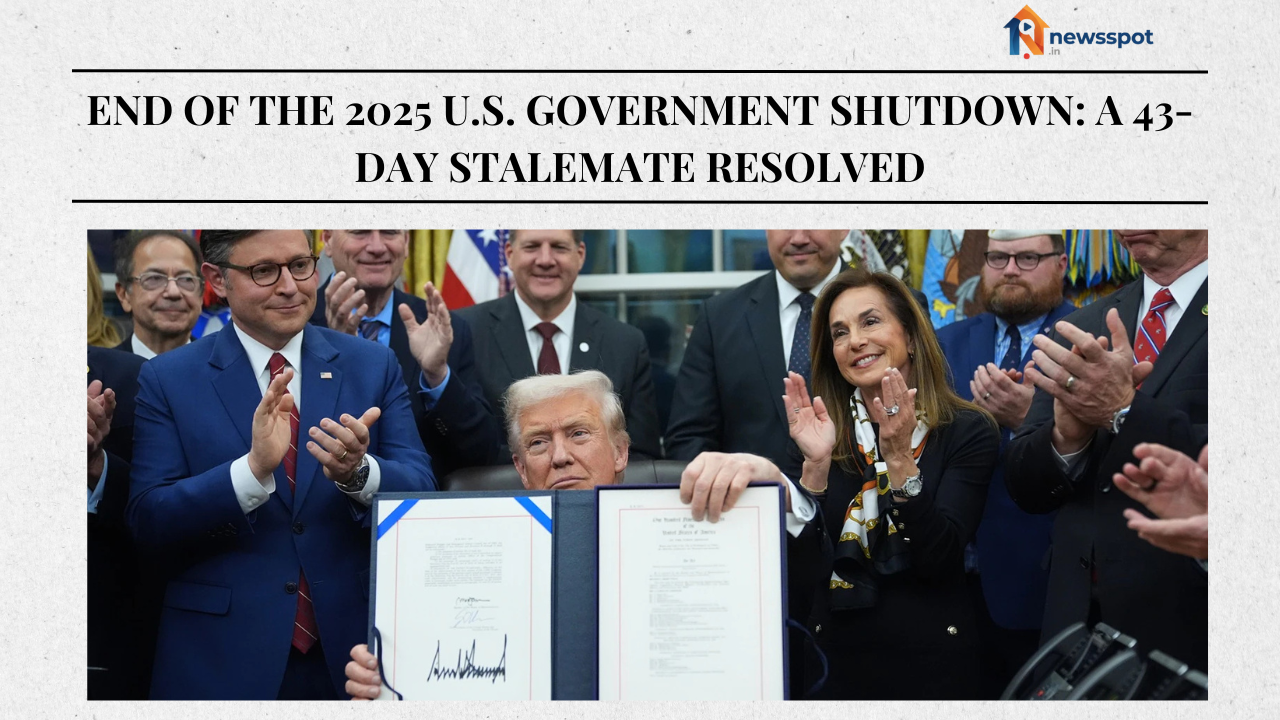
On November 12, 2025, President Donald Trump signed H.R. 5371 into law, ending the longest federal government shutdown in U.S. history after 43 days. The shutdown, which began on October 1, 2025, stemmed from a partisan deadlock over federal spending priorities, particularly Republican efforts to restrict healthcare funding for non-citizens under the One Big Beautiful Bill Act signed in July 2025. The White House framed the resolution as a victory against Democratic “extortion,” while Democrats emphasized bipartisan compromise to avert further economic harm. The funding bill extends government operations through January 2026, providing a temporary reprieve but leaving deeper budget negotiations unresolved.
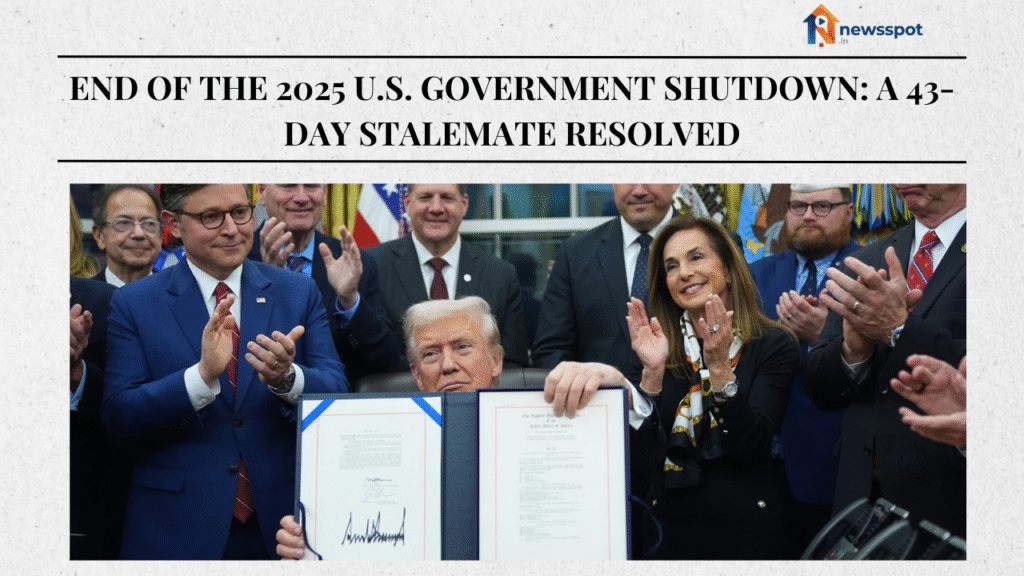
End of the 2025 U.S. Government Shutdown Timeline and Key Events
- Trigger (September 2025): As the fiscal year deadline approached, Republicans in Congress pushed to enforce provisions from Trump’s July 2025 spending bill, including limits on Medicaid eligibility for non-citizens (e.g., barring “illegal aliens” from emergency care expansions that had ballooned costs to $9 billion annually under the prior administration). Democrats, holding the Senate minority, demanded repeal of these restrictions alongside extensions for Affordable Care Act subsidies and tax credits for low-income Americans—measures ineligible for undocumented immigrants per federal law (8 U.S.C. § 1621).
- Shutdown Begins (October 1, 2025): With no continuing resolution (CR) passed, non-essential federal operations halted. House Speaker Mike Johnson and Senate Republicans blocked Democratic proposals, citing “radical demands” for immigrant benefits. Vice President JD Vance accused Democrats of prioritizing “billions in healthcare funding for illegal aliens” over American workers.
- Escalation (Mid-October): Over 800,000 federal employees were furloughed or worked without pay, including IRS staff, national park rangers, and FDA inspectors. Air travel disruptions affected 20,000+ flights, and SNAP (food stamps) funding lapsed for 42 million recipients by late October. The White House released data on 49 criminal non-citizens who had accessed Medicaid emergency services, amplifying claims of abuse.
- Turning Point (Early November): Public pressure mounted, with polls showing 53% blaming Republicans. Bipartisan talks intensified after Senate Democrats agreed to a “clean” CR without full repeals, though it includes protections against mid-shutdown layoffs.
- Resolution (November 12, 2025): The Senate passed the bill 78-22, followed by a 222-209 House vote (mostly along party lines, with some Democratic crossovers). Trump signed it hours later, declaring it a “fiscally responsible product” supporting veterans and farmers without “poison pill” concessions.
White House Perspective and Rhetoric
In a signing statement, Trump accused Democrats of “shutting down the government… in an attempt to extort American taxpayers for hundreds of billions of dollars for illegal aliens,” echoing earlier remarks from Press Secretary Karoline Leavitt and Deputy Chief of Staff Steven Miller. The administration highlighted:
- Immigration Angle: Claims that Democratic demands would commit $200 billion over a decade to non-citizen healthcare, prioritizing “illegal immigrants over American citizens.” This built on White House analyses of state-level programs (e.g., New York’s insurance for undocumented seniors) and federal emergency Medicaid spending.
- Economic Defense: The shutdown was “never painless,” but necessary to reject “entitlements for non-citizens.” Trump praised the outcome as sending a “clear message that we will never give in to extortion.”
A Rasmussen poll found 49% of voters agreed with this framing, though broader surveys (e.g., CBS) showed majority opposition to using shutdowns as leverage.
Democratic and Fact-Checking Counterpoints
Democrats rejected the “extortion” narrative, with leaders like Rep. Rosa DeLauro and Sen. Patty Murray stating their focus was on “lowering the cost of living” via ACA extensions—not undocumented care, which remains federally barred. Fact-checkers (Snopes, Newsweek, BBC) rated White House claims misleading:
- Undocumented immigrants are ineligible for comprehensive ACA or Medicaid benefits; cited “billions” refer to emergency services (e.g., labor/delivery) or lawful non-citizen restrictions.
- The shutdown’s core issue was Republican refusal to fund a bipartisan CR without tying it to immigration cuts, not Democratic demands for new immigrant funding.
- MSNBC criticized the rhetoric as “dehumanizing,” noting it ignored the moral imperative of emergency care.
Impacts and Aftermath
| Category | Key Effects | Estimated Cost |
|---|---|---|
| Economic | $15 billion GDP loss per week; sustained $14 billion hit post-reopening. Small businesses and contractors (no back pay) hit hardest. | $645 billion total (43 days) |
| Workforce | 800,000+ furloughed; military paid retroactively, but 4,000 layoff notices issued/reversed. | Delayed pay for 1 million+ workers |
| Services | National parks closed; food aid cut for millions; loan/benefit processing halted. | 42 million SNAP recipients affected |
| Public Opinion | 71% opposed shutdown tactics; Trump’s approval dipped 5 points. | Bipartisan frustration peaked |
The shutdown surpassed the 35-day 2018-2019 record (over border wall funding) and the 21-day 1995-1996 impasse. While federal operations resume within days—prioritizing back pay and SNAP reloads—it underscores deepening polarization. Analysts warn of recurrence by January without comprehensive reforms, as Republicans eye filibuster changes and Democrats push for spending protections. This episode, blending fiscal brinkmanship with immigration flashpoints, highlights how shutdowns have evolved from budgeting tools to high-stakes political weapons.